History of Lucha Libre and Mexican Wrestling
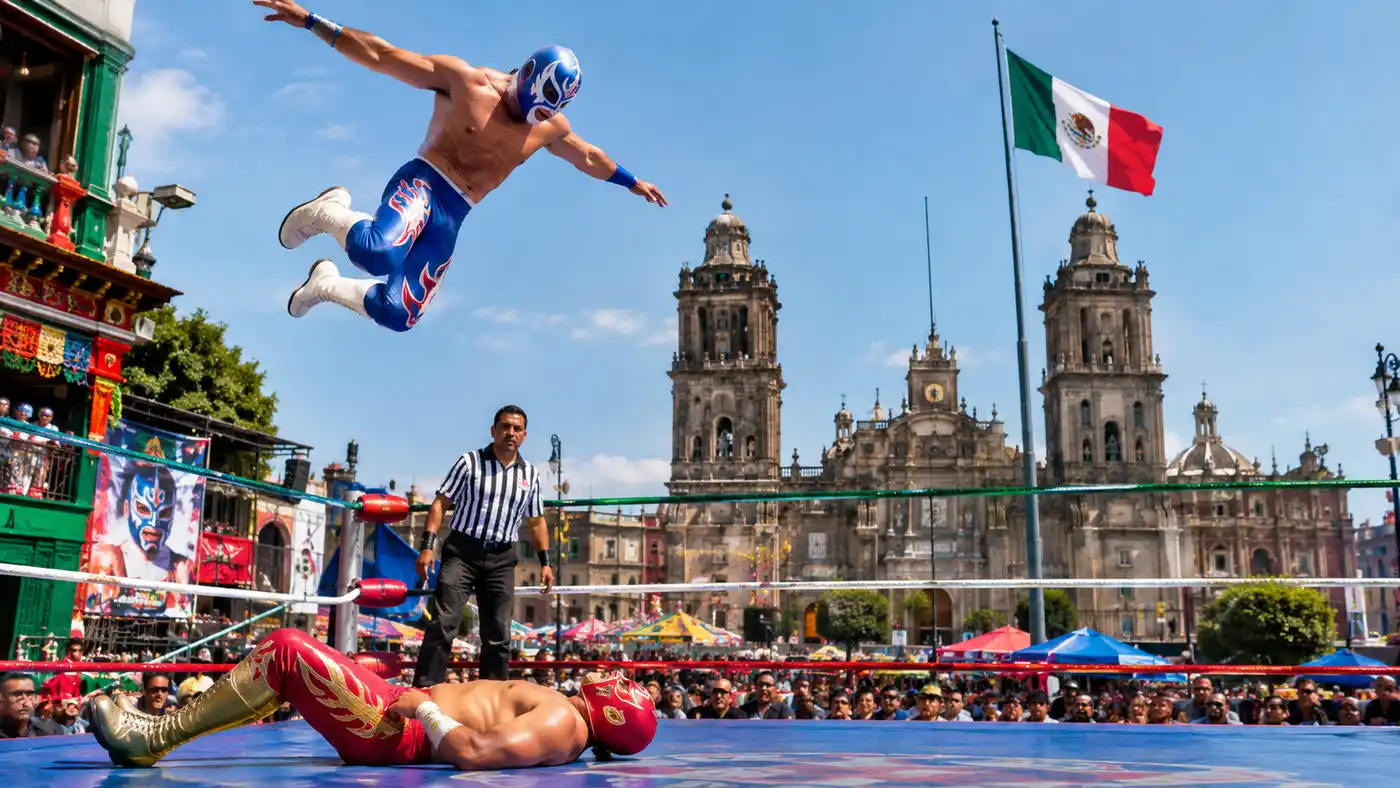
Step outside the Cuauhtémoc metro station on a Friday night, and the smell of sizzling suadero tacos hits you before the roar of the arena does. Vendors hawk bootleg satin masks from wooden folding carts, their colors clashing under the hum of fluorescent streetlights. Inside the concrete belly of Arena México, someone spills a tall paper cup of cheap lager down the steps while three men in patent-leather boots fling themselves across twenty feet of open air. To understand how this wild spectacle took over an entire country, you have to dig into the long, rebellious history of lucha libre, because this sport was never just about body slams.
Most foreign travelers arrive with a casual question: what is Mexican wrestling called, and is it just a local knockoff of American pro wrestling? The simple answer is that Mexican wrestling is called lucha libre, but calling it an imitation misses the point entirely. The complete history of Mexican wrestling spans almost a century of working-class politics, Catholic mythology, ancient Aztec symbolism, and theatrical storytelling. It is an art form woven into the national identity, where identity itself is protected with a mask.
Origins: Where Did Lucha Libre Originate and When Was It Invented?
People often ask where did lucha libre originate and when did lucha libre start. The broad wrestling sport in Spanish speaking countries existed in disorganized forms long before it became an organized pop phenomenon. Back during the French intervention in the 1860s, European soldiers introduced Greco-Roman wrestling styles across cantinas and fairgrounds. For decades, it remained a sideshow curiosity. Men organized crude brawls in gyms and circus tents without standard rules or regular stages. If you ask locals what is wrestling in spanish outside of this theatrical context, they might say lucha grecorromana or simply lucha, but those early bouts bore little resemblance to the aerial madness we watch today.
The turning point happened in 1933. A Mexican tax official named Salvador Lutteroth González had traveled across the border to El Paso, Texas, where he watched professional American wrestling matches. He became obsessed with the raw energy of the crowds. Lutteroth realized that working-class Mexicans, still exhausted from decades of revolutionary unrest, were desperate for cheap, dramatic entertainment. He scraped together his savings, won about 40,000 pesos in the national lottery, and rented an abandoned boxing shed in Mexico City called Arena Modelo.
On September 21, 1933, Lutteroth launched the Empresa Mexicana de Lucha Libre, known today as CMLL. That September evening marks the official moment when was lucha libre invented as a modern, unified league. Lutteroth brought in an American named Cyclone Mackey, who wrestled under the name La Maravilla Enmascarada (The Masked Wonder). Mackey wore a simple leather hood to disguise his identity, and the Mexican fans went wild for it. What started as a foreign novelty ignited something deep in the local psyche.
Note: Arena Modelo was so drafty and neglected in 1933 that rain leaked through the corrugated tin roof onto the paying spectators, yet people still packed the wooden bleachers three nights a week.
Book your lucha libre mexico city experience:
What Does Lucha Libre Mean? Defining the Terminology
To really appreciate the ring, you have to untangle the language. What does lucha libre mean in English? If you break down a basic lucha libre translation, the phrase translates directly to "free fight" or "freestyle wrestling." But the literal lucha libre meaning does not capture the cultural weight behind it. In Mexican culture, the word carries connotations of resilience, endurance, and everyday survival.
Look at the word lucha alone. What is lucha? When you translate lucha to English, the lucha definition boils down to "fight," "battle," or "struggle." If someone on a Mexico City bus tells you they are en la lucha diaria, they mean they are grinding through daily life to make ends meet. That everyday meaning of lucha spills right through the ring ropes. When you ask what does lucha mean to an ordinary fan sitting in the cheap seats, it means pushing back against life's unfairness.
Then comes the performer. What is a luchador? If you look up wrestler in Spanish, you get luchador. Wrestler Spanish terms are straightforward: luchador (male), luchadora (female), or plural luchadores. But if you ask a local to define luchador, they will give you something far more romantic than an athletic job title. Here is how the terminology breaks down for a newcomer:
- Luchador meaning: The core fighter in the ring, literally translated as wrestler or combatant, viewed culturally as a modern folk hero or comic-book warrior brought to life.
- El luchador meaning: The specific persona or character adopting a distinct ring alignment, mask design, and personal mythology.
- Luchadora meaning: A female wrestler; for decades women fought institutional bans to gain equal billing in Mexican arenas.
- Luchas in English: A common colloquial phrase Mexicans use to describe the matches themselves, as in "are we going to the luchas tonight?"
- Luchadores in English: The collective plural for the performers, spanning both heroic and villainous personalities.
A wrestling match in Spanish is an emotional opera disguised as sport. Every single move inside that square canvas tells a story about good people getting wronged and fighting like hell to get even.
The Golden Age: Masks, Movies, and El Santo
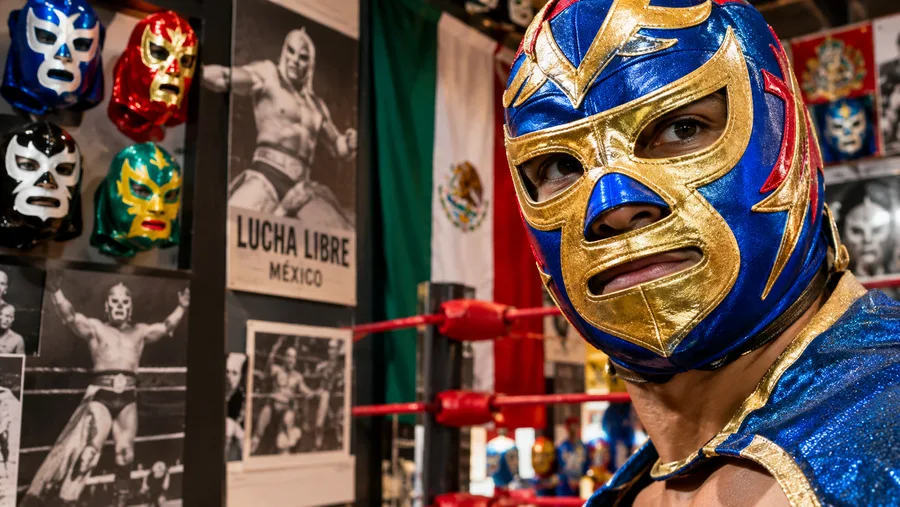
The period between the early 1940s and the late 1960s transformed the sport into a global cultural export. During this era, luchador history diverged radically from American pro wrestling. In the United States, wrestlers relied heavily on trash talk, muscular bulk, and microphone work. In Mexico, promoters leaned into fast-paced acrobatics, dramatic anonymity, and colorful gear. The mask became sacred. What started with Cyclone Mackey grew into an obsession with identity, heavily influenced by the meaning and design of lucha libre masks, which drew on Aztec jaguar warriors and Catholic patron saints.
Nobody embodied this transformation like Rodolfo Guzmán Huerta, known universally as El Santo, the Silver-Masked Man. Debutting in 1942, El Santo took the country by storm. He never took off his mask in public for four decades. He wore it to restaurants, through airport customs checkpoints, and while driving his sports car around Colonia Del Valle. He starred in 52 feature films, saving Mexico from vampires, Martian invaders, mad scientists, and mummies. For millions of working-class families who could not afford movie tickets to Hollywood blockbusters, El Santo was a living savior who spent Friday nights bleeding on canvas for seventy-five pesos a ticket.
Other legends filled the ranks alongside him. Blue Demon emerged as his great rival and reluctant ally, clad in cobalt blue and silver. Gory Guerrero invented dozens of the acrobatic submissions still used in American wrestling rings today, including the famous Gory Special and the Camel Clutch. These men turned Mexican wrestling sport into an international brand.
Pro tip: If you want to see authentic vintage lucha relics, skip the tourist shops in Centro and visit the small memorabilia stall inside the Mercado Balderas on Saturday mornings, where vendors sell original 1960s lobby cards and genuine expired licenses from the Mexico City Boxing and Wrestling Commission.
Book your lucha libre mexico city experience:
Is Mexican Wrestling Real? Understanding the Ring Dynamics
Skeptics love to ask: is Mexican wrestling real? The honest answer requires a bit of nuance. The match outcomes are predetermined, and the rivalries are heavily staged, just like in any pro wrestling promotion worldwide. But call it "fake" to a luchador who just took a running flip off the top turnbuckle onto hard concrete, and you will get a very cold look. The athletic impact is brutal. Broken collarbones, shattered kneecaps, and concussions are routine occupational hazards.
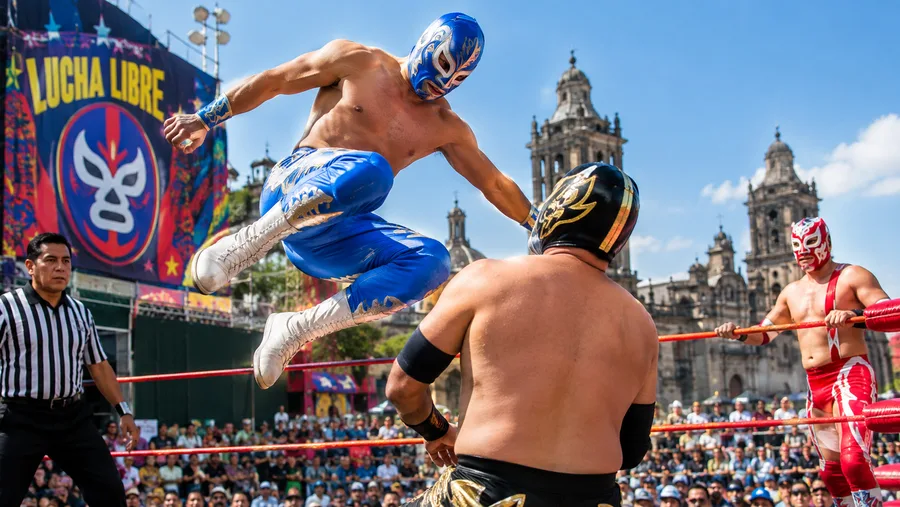
Mexican wrestling uses a 20-foot ring with three taut ropes, but the ropes are strung tighter than their American counterparts, allowing wrestlers to spring higher into the air. The canvas sits on hard wooden boards supported by steel girders, with far less bounce and padding than an American WWE ring. A heavy flat-back bump in Mexico City rattles your dental fillings.
What really separates the sport mechanically is its unique theatrical structure. Unlike the standard one-on-one matches popular abroad, Mexican rings favor chaotic team setups. Understanding the fundamental match conventions makes sitting through a live three-hour card infinitely more fun:
- Lucha de relevos australianos meaning: The signature Mexican match format, translating to "Australian tag team match." It pits two teams of three luchadores (trios) against each other in a frantic, two-out-of-three falls battle without the need for formal physical tags.
- Los Técnicos: The good guys. They wrestle cleanly, execute high-flying aerial moves, follow the rules, and wear bright, noble masks.
- Los Rudos: The villains. They cheat, choke opponents with ring ropes, kick groin shots behind the referee's back, and insult the fans in the front row.
- Lucha de Apuestas: The highest-stakes wager match possible. Luchadores put their most prized possessions on the line: mask versus mask (máscara contra máscara) or hair versus hair (cabellera contra cabellera). The loser is unmasked publicly or shaved bald in the middle of the ring.
A mask wager match carries devastating consequences. Once an enmascarado loses their mask in a sanctioned Mexican match, wrestling commission rules dictate they can never wear that specific mask or persona again in that jurisdiction. They must stand exposed in front of ten thousand cheering fans, announce their real legal name, their birthplace, and how many years they have worked as an athlete. Honestly, watching a grown man weep while unclipping his laces in the ring is one of the rawest things you will ever see in sports.
Historical Eras of Mexican Wrestling
The history of Mexican wrestling didn't happen in a vacuum. It shifted alongside Mexican politics, the rise of television, and the opening of national borders. Here is a snapshot of the major eras that defined the sport over the last nine decades.
| Era | Key Years | Defining Milestones | Iconic Figures |
|---|---|---|---|
| Foundational Era | 1933 - 1942 | Lutteroth creates EMLL; Arena Modelo opens; masks introduced from Texas. | Salvador Lutteroth, Cyclone Mackey, Charro Aguayo |
| The Golden Age | 1943 - 1970 | Lucha cinema explodes; Arena México opens in 1956; national radio and TV broadcasts begin. | El Santo, Blue Demon, Black Shadow, Gory Guerrero |
| Independent Revolution | 1975 - 1989 | Rival promotion UWA launches at El Toreo de Cuatro Caminos; heavier, stiffer brawling styles take root. | Mil Máscaras, Canek, Perro Aguayo, Dos Caras |
| The Modern Boom & Split | 1992 - 2005 | Antonio Peña creates AAA; hardcore gimmickry arrives; cruiserweights invade the United States. | Rey Mysterio Jr., Konnan, La Parka, Eddie Guerrero |
| Global Era | 2006 - Present | Streaming platforms, international cross-promotions, and UNESCO cultural heritage recognition. | Místico (Carístico), Pentagon Jr., Psycho Clown |
Modern Shifts: From Underground Brawls to UNESCO Heritage
By the early 1990s, the old ways were starting to feel stiff. Antonio Peña, a creative booker for CMLL, grew frustrated with the promotion's rigid, conservative traditions. In 1992, he broke away to found Asistencia Asesoría y Administración, known everywhere as AAA. Peña turned the volume up. He added fire, steel chairs, midget performers, costumed mascots, and outlandish pyrotechnics. The bitter rivalry between CMLL (the strict purist traditionalists) and AAA (the rock-and-roll upstarts) revitalized the whole scene and brought in a generation of hyper-athletic teenagers like Rey Mysterio Jr. and Juventud Guerrera.
Women fought an even steeper uphill battle. Promoters banned women from competing in Mexico City arenas for roughly thirty years, claiming the bouts were too violent and unbecoming for mothers and daughters. Luchadoras were forced to work small dusty border towns in the north just to practice their craft. It was not until 1986 that the ban was officially lifted at Arena México, opening the floodgates for legends like Irma González, Lola González, and later modern superstars who command headliner spots on major pay-per-views.
In July 2018, the government of Mexico City officially declared lucha libre an Intangible Cultural Heritage of the capital. It was an extraordinary acknowledgment for something that started in an abandoned, leaky shed. The sport survived recessions, earthquakes, pandemic shutdowns, and endless cultural competition from American wrestling and European soccer. It survives because it belongs to the neighborhood. The guy selling you glazed pastries in the bakery on Wednesday morning might be the masked rudo you spend Friday night screaming curses at from row eight.
Frequently Asked Questions about history of lucha libre
What is the difference between lucha libre and American pro wrestling?
Lucha libre emphasizes high-flying aerial maneuvers, continuous rapid movement, and dramatic tag-team trios formats over heavy ground brawling and speech segments. The sacred cultural role of masks, traditional two-out-of-three falls rules, and the strict good-versus-evil (técnico vs. rudo) dynamic also set Mexican wrestling apart from American promotions.
When did luchadores start wearing masks?
Masks entered the ring in 1933 when Salvador Lutteroth hired American wrestler Cyclone Mackey to perform as "La Maravilla Enmascarada" in Mexico City. Mexican leather artisan Don Antonio H. Martínez crafted the first secure, comfortable leather masks shortly after, establishing a tradition that quickly became the defining feature of Mexican wrestling.
Can a unmasked luchador ever put their mask back on?
Under official Mexican wrestling commission rules, a wrestler who loses their mask in a sanctioned Lucha de Apuestas (wager match) can never legally wrestle under that masked identity again in that jurisdiction. While some wrestlers have changed characters or worked masked in foreign countries, returning to the original mask at home is considered deeply disrespectful to the sport's traditions.
Quick Reference
- Founded September 21, 1933 by Salvador Lutteroth González.
- Primary promotions are CMLL (oldest, traditional) and AAA (modern, flashy).
- Signature match format is the 6-man relevos australianos (trios).
- Recognized as Intangible Cultural Heritage of Mexico City in 2018.
Book your lucha libre mexico city experience:
Stepping Into the Arena
Reading about the history of Mexican wrestling is one thing, but sitting on a cold concrete bench while four thousand people scream rhythmic obscenities at a crooked referee is something you have to live. It is cheap, unpretentious, loud, and weirdly emotional. If you find yourself in Mexico City, skip the sanitized hotel bars for one night. Grab an unbranded foam mask outside the gate, squeeze into the bleachers, buy a bag of lime-drenched salted peanuts, and lose your voice cheering for the silver hood. You will never see the city the same way again.
Read more about lucha libre mexico city.