The Meaning and History of Lucha Libre Masks
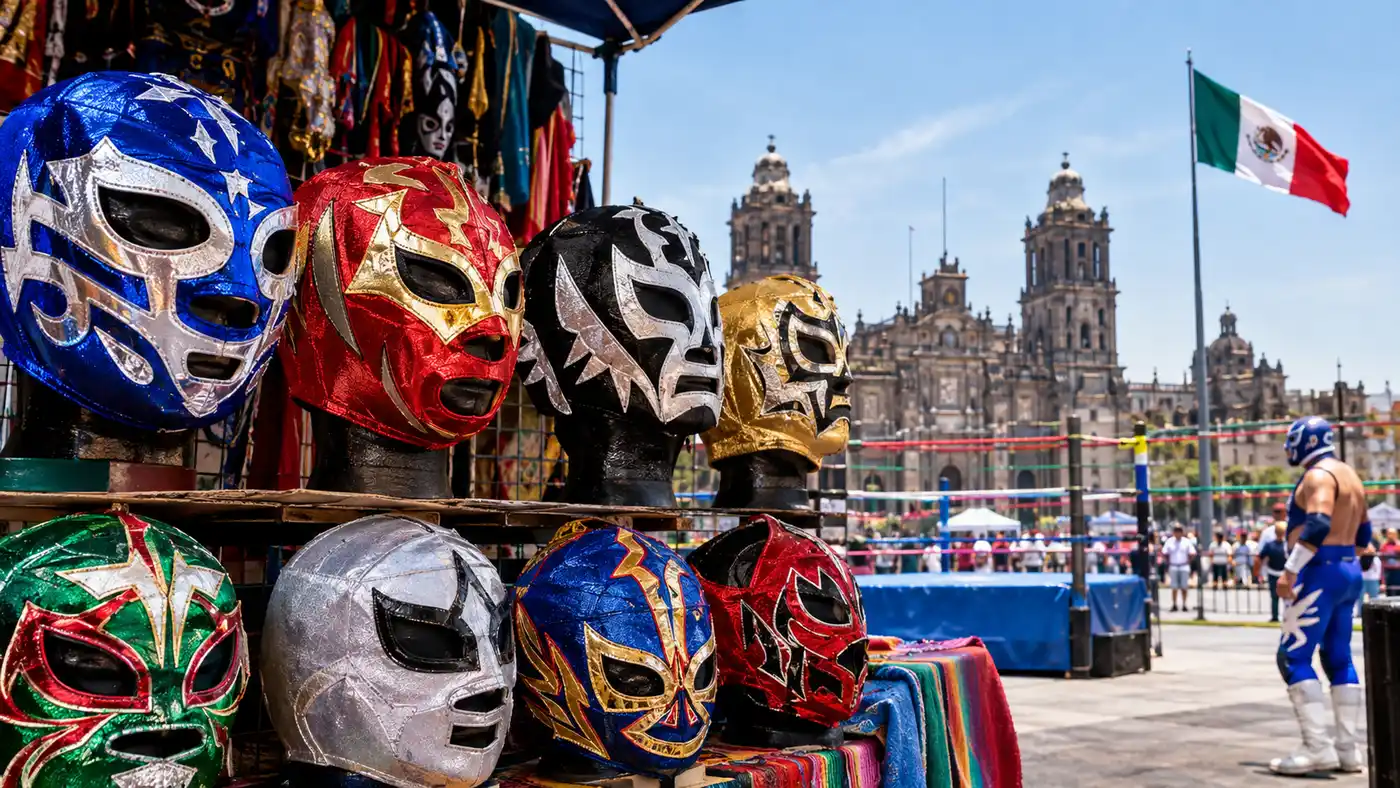
Walking down Calle Dr. Lavista on a Friday night feels like wandering straight into an electric carnival. Street food smoke drifts across the asphalt, smelling of spiced pork fat and toasted corn, while dozens of vendor tarps glow under harsh naked lightbulbs. Hanging from string lines by the hundreds are synthetic faces: gleaming silvers, violent neons, snarling fangs, and gold foil wings. If you hand over 80 pesos for a cheap souvenir luchador mask right outside the turnstiles, you are buying a scrap of stretchy polyester, yet stepping inside the building changes everything about that scrap of cloth. In the ring, that fabric functions as an alter ego, an ancestral totem, and a legal identity protected by decades of ring lore.
Travelers often assume Mexican wrestling masks are just eccentric ring gear, like capes in American pro wrestling or carnival costumes meant to whip up an audience. That misses the entire point of the spectacle. When a wrestler pulls that hood over their ears and laces the back tight against their neck, their civilian life evaporates completely. Their daytime debts, family troubles, and mundane routines cease to exist until the laces come undone. To understand the Mexican ring, you have to understand why the mask is treated with the kind of reverence usually reserved for religious icons and military honors.
Book your lucha libre mexico city experience:
The Cobbler Who Accidentally Built an Industry
The whole tradition started because of an American who was tired of having his face scratched up. Back in the early 1930s, Salvador Lutteroth had just founded the venture that would grow into modern Mexican wrestling, which you can read about in our deep dive into the history of lucha libre. At the time, fighters wrestled bareheaded with bare chests, just as they did in gyms in Texas, Chicago, or Manchester. An American grappler named Cyclone Mackey was working bouts in Mexico City, but he hated taking fingers to the eyes and having opponents yank at his sideburns. He wanted a leather hood that would protect his head while hiding his pale, recognizable features.
Mackey took his problem to Don Antonio Martínez, a skilled bootmaker working out of a small workshop in the capital. The first attempt in 1933 was an absolute disaster. The cowhide was stiff, the seams scraped Mackey's cheekbones raw, and the eye holes slid around whenever sweat hit the brow line. Mackey was furious, but Martínez took it as a personal insult to his craft. He spent months taking exact cranial measurements, experimenting with goatskin, pigskin, and soft chamois leather, testing six different patterns until he cracked the code. The resulting hood hugged Mackey's skull like a second layer of skin, staying rigid around the jaw while allowing full vision and clear breathing through the nose.
When Mackey debuted the mask under the ring name La Maravilla Enmascarada, the crowd in the old Arena Modelo lost its collective mind. Nobody had seen anything like it. Other fighters secretly began slipping into Martínez's workshop late at night, begging the shoemaker to build hoods for them too. Martínez ended up founding Deportes Martínez, a family business that still operates today near Arena México, supplying ring-worn leather and lamé hoods to generations of masked fighters across four continents.
Pro tip: If you want to see where maskmaking history lives, walk into the tiny Deportes Martínez shop on Calle Dr. Velasco, just two blocks south of Arena México, where you can buy genuine ring-grade gear directly from the family that invented it.
Aztec Warriors and the Transformation of the Self
While an American requested the first hood, the phenomenon took deep root in Mexico because it touched an ancient cultural nerve. Long before Europeans brought Greco-Roman grappling across the Atlantic, Mesoamerican societies practiced ritualized physical combat. Aztec eagle warriors and jaguar knights went into battle wearing animal skins, wooden headdresses, and painted masks, not just to intimidate their rivals, but to invoke the spiritual essence of the predator. Anthropologists call this nahualism: the belief that a human being can temporarily cross over and channel the raw, untamed spirit of a sacred beast.
The moment a modern fighter pulls on a mexican wrestling mask, that exact psychological shift occurs. It is not an actor putting on makeup for a play. A mild-mannered accountant or father of three becomes an avenging angel or a ruthless underworld demon the second his eyes line up behind the eyelets. The mask grants complete psychological release from the crushing socioeconomic pressures of daily life in urban Mexico. Behind the vinyl, you are invulnerable, larger than life, and capable of leaping off the top turnbuckle through a wooden table without flinching.
This dynamic also defines the eternal morality play between the two wrestling factions: the técnicos, who are the clean-fighting heroes who represent civic virtue and justice, and the rudos, the rule-breaking villains who cheat, bite, and spit. A técnico typically wears clean colors, angelic wings, or Aztec sunbursts, while a rudo favors dark stitching, horns, snarling lips, and predatory animal patterns. The mask tells the audience immediately where a fighter stands on the moral ledger.
Famous Designs and What Their Symbols Mean
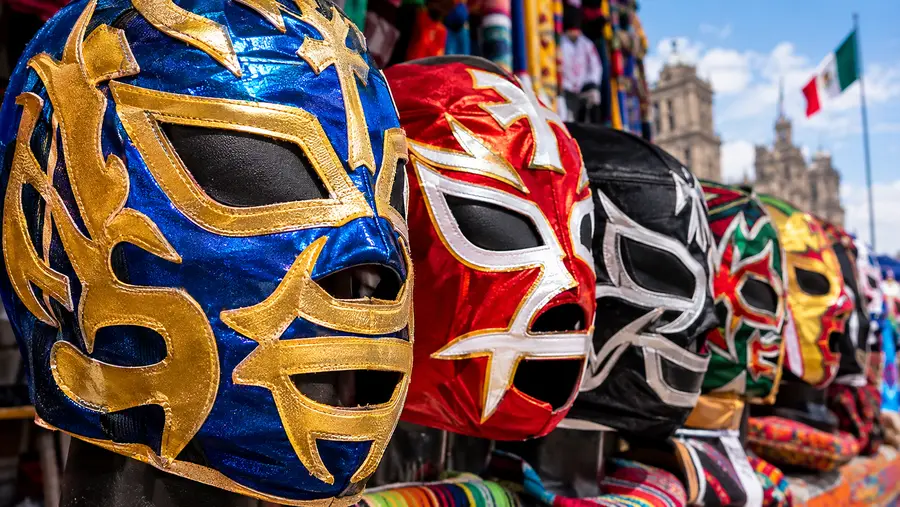
Every classic mexican luchador mask carries a specific visual language built from Catholic imagery, pre-Hispanic mythology, comic book lore, and pure working-class style. In the golden era of the 1950s and 60s, designs stayed minimal because television broadcasts were black-and-white. Wrestlers needed bold, high-contrast silhouettes that viewers could distinguish on fuzzy television sets in neighborhood bars. Over decades, these visual trademarks hardened into sacred cultural legacies that pass down through wrestling dynasties from father to son.
Looking at the pantheon of famous Mexican luchadores reveals how deeply personal these designs become. El Santo, the greatest icon in Mexican pop culture history, wore an entirely unadorned silver hood made from smooth silk and later metallic fabric. It had no fangs, no wings, and no flourishes, just stark teardrop eyes and a simple mouth slit. That blinding silver color symbolized total purity, an angelic protector defending ordinary people from monsters, corrupt cops, and cinematic vampires.
| Luchador | Dominant Colors | Mask Elements | Symbolic Meaning |
|---|---|---|---|
| El Santo | Pure Silver | Smooth blank hood, oval mouth | Purity, justice, angelic virtue |
| Blue Demon | Cobalt Blue & White | White leather eye trim, grim mouth | Subterranean cool, industrial grit, working-class stoicism |
| Mil Máscaras | Varies (Multi) | Split-face designs, Aztec motifs | Chameleon spirit, cosmopolitan identity, Aztec heritage |
| Rey Mysterio | Gold, Red, Green | Cross on forehead, eagle crests | Devout Catholic faith blended with Aztec eagle warrior speed |
| Pentagón Jr. | Black & Bone White | Stylized skull, open jawline | Zero fear, underworld intimidation, relentless rudo violence |
Blue Demon, Santo's lifelong rival, chose a deep royal blue hood with white leather trim around the eyeholes, designed to look unshakeable, industrial, and stoic. When Mil Máscaras arrived in the late 1960s, he revolutionized mask design by refusing to settle on a single look. He traveled with hundreds of combinations in his suitcase, swapping them between rounds. He introduced silk satins, metallic Japanese lamé, intricate hand-tooled leather trim, and complex Aztec serpent motifs, turning the lucha libre wrestling mask into high-fashion sports couture.
Book your lucha libre mexico city experience:
Luchas de Apuestas: The Sacred Blood Bet
Nothing in international professional wrestling compares to the tension of a lucha de apuestas, or match of bets. In normal matches, championship belts are defended, but championships in Mexico are mostly treated as props for technical exhibitions. The real money, the real blood, and the deepest emotional stakes belong to matches where wrestlers wager their most prized possessions: hair against hair, mask against hair, or the absolute peak of sporting drama, mask against mask.
When two masked rivals sign an apuesta contract, they agree that the loser must remove their mask in the middle of the ring and reveal their civilian name, hometown, and years as a professional fighter. It is treated like an execution. The loser stands under the arena lights, sweating, bleeding, and weeping alongside their family members in the front row, slowly unlacing the hood to show a bare face to thousands of screaming spectators. The losing luchador hands the stripped hood directly to the victor as a trophy of war.
Note: Under traditional Mexican wrestling commission regulations, once a masked fighter loses their hood in an official lucha de apuestas, they are permanently prohibited from ever wearing that mask or using that ring name again inside the country.
Because the consequences are irreversible, the greatest old-school fighters guarded their real identities with paranoid obsession. Do luchadores wear masks all the time? In public, the traditional ones absolutely did. El Santo lived his entire adult life in silver. He carried a legal passport that showed his face covered by his silver mask, an exception granted directly by the Mexican government. When he flew commercial airlines, he took later flights than his wrestling colleagues so nobody saw him without the hood in security queues. He wore it to high-end restaurants, cutting his food into small bites to slide underneath the chin fabric. He only took the mask off once on national television, lifting the chin just enough to reveal his aging face for three seconds, one week before he suffered a fatal heart attack in 1984. He was buried wearing his silver hood, exactly as he lived.
Mask Grades, Fabrics, and Where to Find Them
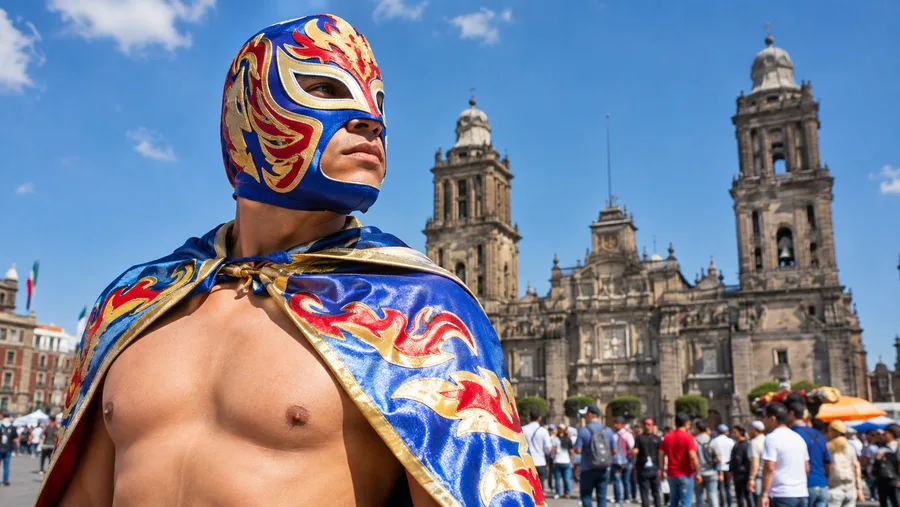
If you are exploring the markets looking for a mask to take home, you will quickly notice an overwhelming spread in quality and price. Sidewalks in Mexico City are flooded with cheap souvenirs, while specialty shops sell heirloom leather gear that costs hundreds of dollars. Understanding the construction keeps you from overpaying for a piece of foam that falls apart after two sweaty wears.
Masks break down into three distinct construction tiers based on materials and durability:
- Commercial souvenir masks: Sold outside arena doors for 60 to 120 pesos, these use cheap polyester tricot with a thin foam sponge lining. They are held together by rough, single-thread stitching that will tear if stretched aggressively.
- Semi-pro collector masks: Priced around 350 to 750 pesos, these feature sturdy metallic lycra, genuine vinyl appliques, double-stitched eye outlines, and heavy-duty back lacing with reinforced metal eyelets.
- Professional ring-ready masks: Running anywhere from 1,800 to 5,000 pesos, these are made from heavy Japanese brocade, real leather, or four-way stretch spandex. They include reinforced cotton forehead bands, moisture-wicking throat guards, and custom jaw shaping tailored to withstand full ring impact.
Finding a good one depends entirely on how deep into the subculture you want to dig. You can grab decent souvenirs within thirty seconds of stepping out of the Niños Héroes metro station, but tracking down custom ring gear takes an afternoon of navigating neighborhood streets.
Here are the best places in Mexico City to hunt for masks across different price points:
- Arena México sidewalk stalls: Spread along Calle Dr. Lavista on Tuesday and Friday fight nights, this is the prime spot for cheap souvenir masks, novelty t-shirts, and foam kid gear.
- Mercado de Sonora: Stalls in the front corridors of this sprawling market sell bulk costume masks at bottom-dollar wholesale prices.
- Deportes Martínez (Colonia Roma): The undisputed historic shop for collectors wanting custom-fitted, professional-grade masks hand-sewn by the family who started it all.
- Tianguis Cultural del Chopo: A famous Saturday rock and punk street market near Buenavista station where independent mask artisans sell underground designs directly from folding tables.
When trying on a mask, pay attention to the eye placement and the bridge of the nose. Cheap masks cut circular eye holes that scrape your eyelashes every time you blink. A well-designed hood has teardrop or almond openings that sit flush against your brow bone without obstructing peripheral vision. If the lace string on the back snaps the first time you pull it snug, you are holding cheap sidewalk polyester.
Frequently Asked Questions about luchador mask
Why do luchadores wear masks?
Luchadores wear masks to establish a larger-than-life ring persona, conceal their civilian lives, and honor historical traditions rooted in Mesoamerican warrior rituals where combatants transformed into spiritual entities.
Can a luchador get their mask back after losing it in a match?
No, official lucha libre commission rules in Mexico state that once a wrestler loses their mask in a sanctioned lucha de apuestas, they can never wear that mask or compete under that ring name again.
How do wrestlers breathe and see through the masks?
Authentic masks are constructed with tailored teardrop eyeholes, reinforced nostril perforations, and flexible open jawlines that allow wrestlers to breathe heavily and maintain full peripheral vision during aerial maneuvers.
Quick Reference
- First mask created in 1933 by shoemaker Antonio Martínez
- El Santo was legally buried in his iconic silver hood in 1984
- Apuesta matches force losers to permanently give up their mask and name
- Souvenir masks cost 80 to 120 pesos; professional gear runs 2,000+ pesos
Book your lucha libre mexico city experience:
The Bottom Line
A mask from Arena México is far more than a goofy conversation piece to hang over your bookshelf back home. It carries nearly a century of artisanal leatherworking, ancient mythological identity shifts, and the living blood-and-sweat drama of Mexico City working-class entertainment. The next time you sit in the upper bleachers drinking a cold michelada while two masked titans launch themselves off the ropes, take a close look at the stitching on their hoods. You are watching people turn scraps of cloth into immortality, one Friday night at a time.
Read more about lucha libre mexico city.